
The Trust Economy
// Imports removed

As described in a previous article about the Taylor bathtub, the assumption that in times of digitization the most important front is technology is wrong. And a closer look reveals that many of these technological innovations focus on people: Collaboration platforms, communication channels and knowledge management are the best sellers. In this article I would therefore like to explain the effects of this change in focus, why traditional business models could become extinct and the requirements for sustainable strategies.
Silicon Valley shows the way
If you want to know in which direction business/work models could develop, a look at Silicon Valley is worthwhile. Many of the most valuable and promising companies are platform companies that no longer provide content but a marketplace. Sometimes real goods are sold (Amazon Marketplace, Ebay), sometimes customers offer services (AirBnB, Uber) and sometimes the customers are even the product (Facebook, Youtube). All these companies have something in common: they do not own their assets (i.e. value-adding goods), but only network third-party providers with customers. The problem from the company's point of view is that third parties and customers are in no way bound to the platform. When I first drove Uber in the USA in 2016, there was no competition in the small town of Pensacola, FL. 18 months later it was already clear that it would make sense to have both Lyft and Uber apps on the smartphone in order to always be able to take advantage of the better offer. With the ten $5 vouchers Lyft (indirectly sponsored by the investors Alibaba, Tencent and Didi) offered me, it was clear that I would not take one more Uber. Why should I? The drivers were the same, they worked for Uber and Lyft at the same time.
What about classic companies that have real assets?
You will now ask yourself whether this trend also applies to classic companies. After all, they have machine parks, halls, buildings, land and lots of tangible company assets that cannot be copied. But is that true? Does the pure physical property not make an asset copyable? Of course not! Here, too, it is worth taking a look at Asia (not because they are particularly bold copies, but because the future lies in front of our eyes): During my time in Thailand I worked in the automotive industry in a process optimization project. When I talked to my boss to discuss possible ways, he always surprised me with knowledge about competitors and their processes. When he noticed my confusion, he explained that many companies in Asia buy up old tools or machines from the competition or hire the same suppliers as the competition. By enticing away a few employees, a certain "transparency" quickly results. So it didn't surprise me when I came into contact with a Chinese startup several years later, which was not yet a year old and already had over 5000 employees. It is difficult to imagine how the whole thing went but one thing is clear: an organically grown competitor of similar size does not protect its physical possessions from this new company.
Another current example are Chinese call-a-bike companies(opens in a new tab), which are currently flooding European cities with bicycles and competing with local companies such as Deutsche Bahn. It turns out that even tangible assets with enough money do not protect against copying the business model.
The externalization of everything
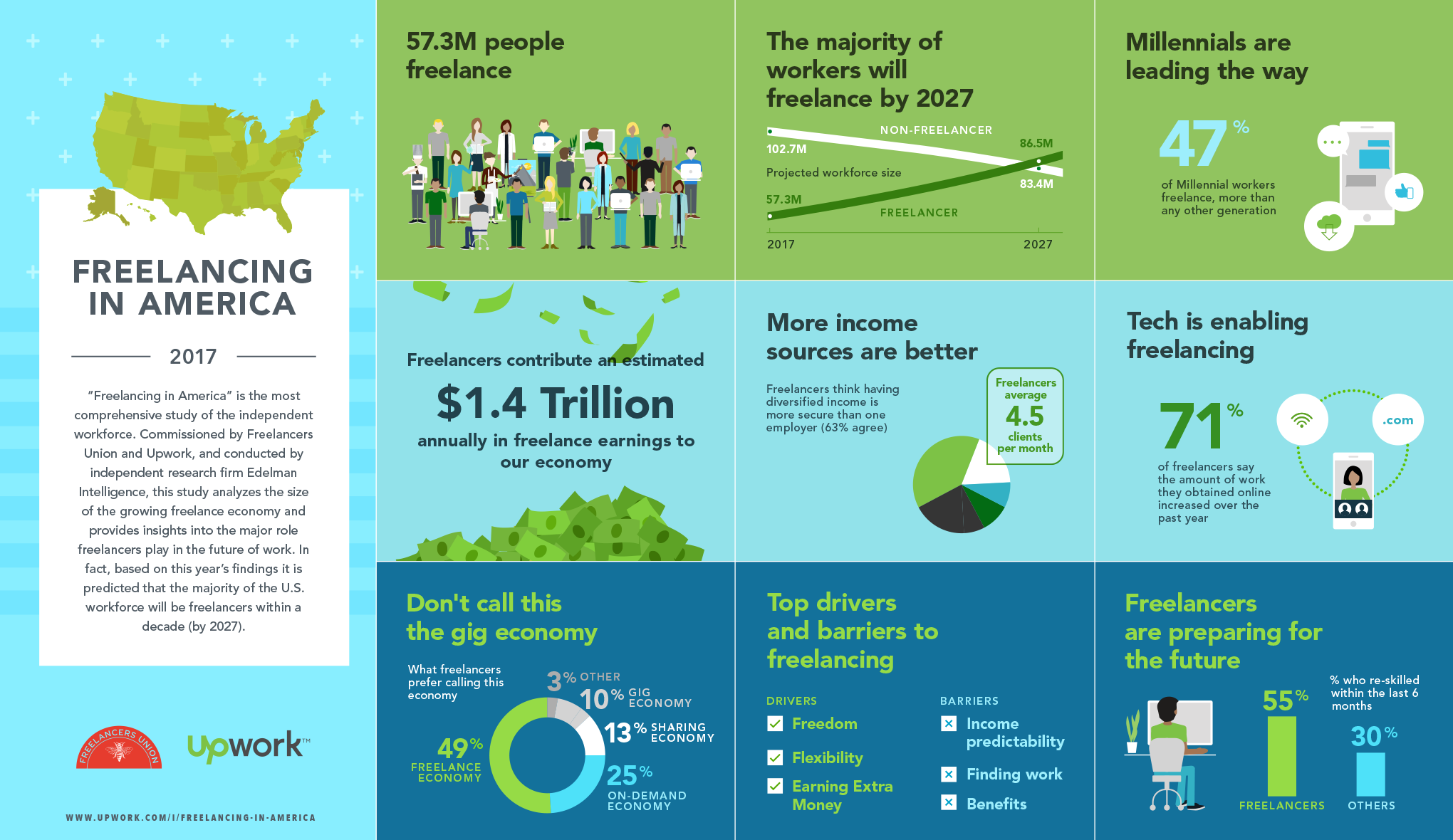
Another trend is accelerating this development: American studies assume that the majority of American workers will work as freelancers in 2027.
Companies are also moving in this direction: In mid-2017, NYTimes published an article by a company that was founded for the duration of a project and then dissolved again(opens in a new tab).
Professors Michael Bernstein and Melissa Valentine of Stanford University consider this idea of so-called Flash organizations applicable to many different industries thanks to modern collaboration technology. Thus, in addition to the presumed software industry, the first attempts of the pharmaceutical industry to force companies out of the ground and operate 100% by freelancers for the duration of the project are already evident.
Also Olli, an already delivered autonomous vehicle(opens in a new tab) of the company Local Motors has a similar history:
LMLabs offered the company a collaboration platform for inventors and engineers to successfully build a car together. Investor Airbus is pleased about this success together with the almost 50 managers and administrators, who are the only permanent employees of the company.
Network idea: Edges and nodes
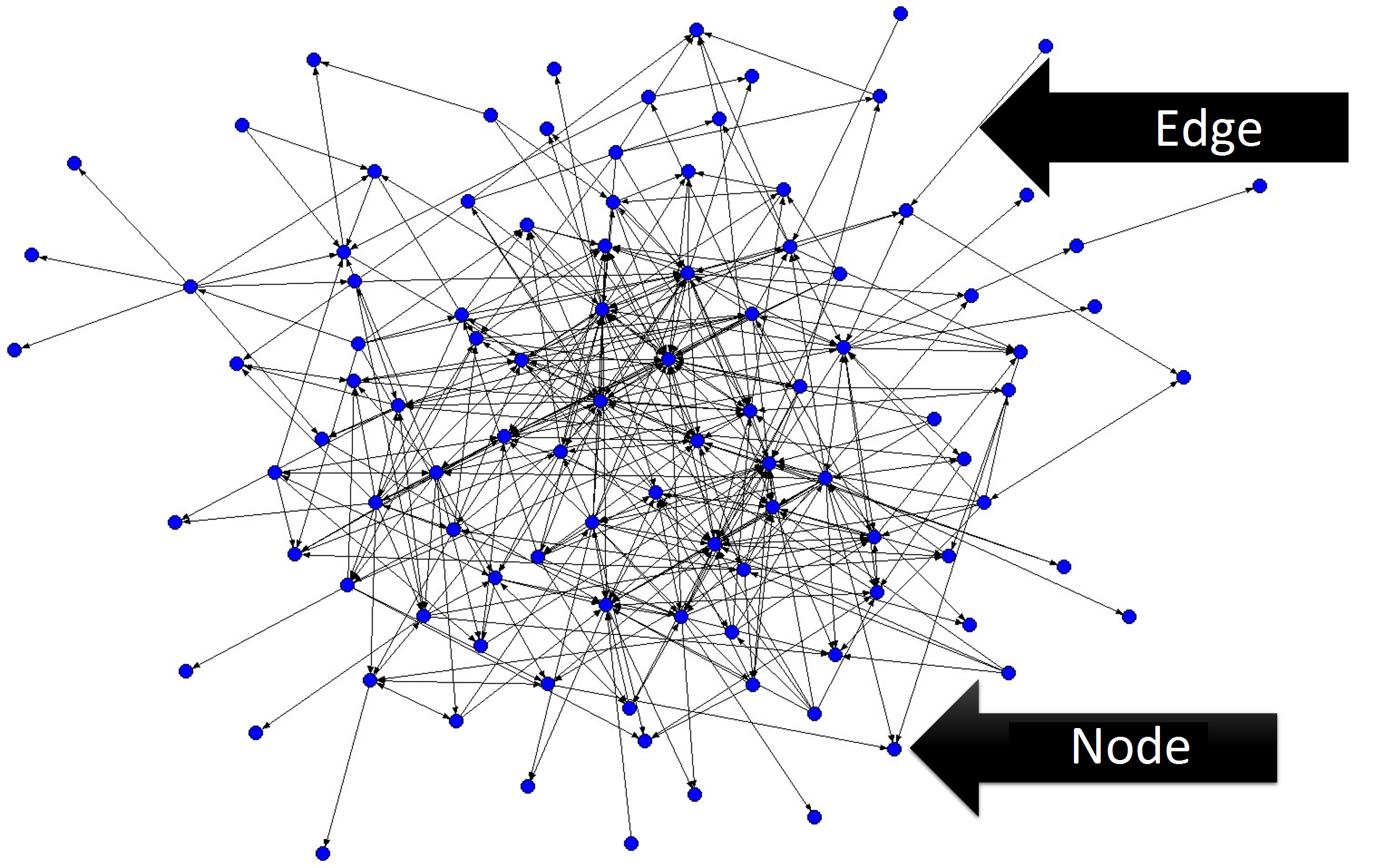
So are all companies doomed, because they could be copied and displaced at any time? The answer has been differentiated: Only if they can't change their focus. For far too long, the focus has been on the node of a network: who has which machines, which employees, which customers, which products, which patents, which knowledge. All these points can be brought into an active relationship in a diagram (so-called edges are created). For example, employees work together and products are sold to customers. The resulting network image of edges and nodes should serve to understand the so-called trust economy.
Trust Economy
First of all: Trust Economy has nothing to do with blockchain, although the blockchain beats strongly abstracted into the same notch. The term trust economy describes the phenomenon that trust and interpersonal relationships will become the most important resource. The reason for this should now be clear: trust and interpersonal relationships cannot be copied! The asset thus becomes the reputation: How are the judgement, the knowledge, the behaviour of an economic entity in different situations assessed by its peers?
Pioneers like Rachel Botsman have recognized(opens in a new tab) that building trust is the only sustainable strategy for Peer2Peer companies (platform providers). She focused on platforms on which everything is now available for sharing:
From cars (Witkar) and bicycles (Spinlister) to office space (LooseCubes) and gardens (Landshare) to money (LendingClub), skills (Skillshare), services (Taskrabbit) and even pets (DogVacay).
The reputations collected on these pages are of great importance. Recruiters reported that programmers increasingly wrote their reputation rating of stack overflow prominently in their CV and that companies also use this rating specifically for the assessment and search of candidates.
Trust to external
But does this only apply to Peer2Peer companies? What is certain is that they will be the first to be affected by this development. But as has already been shown, other companies are not immune from copies either. As I have already described in another article on the bottleneck concentrated strategy, it is immensely important to know the exact needs of the customer. But can customers who only want the product to be cheap be sustainably retained? The answer is clearly no. It shows how important it is that such companies (also) seek new customers, as this business model is not sustainable.
Let's take the customers who have "soft" needs. How do companies like Mercedes Benz secure customer loyalty when products are becoming more and more uniform and even slip from the B2C to the B2B sector through car-hailing? Emotional marketing, elaborate customer relationship management and expansion of business models into other areas of life (finance, mobility services, design, living space) show how such companies have identified their target groups well and work efficiently on customer trust.
You will now tell yourself that in the end the quality of the product and the price are much more important and emotional aspects are secondary. Without wanting to go into obvious counterexamples such as Apple, this point is becoming more and more valid: Extrapolating the trend of comparison websites for product search queries and adding personal data and artificial intelligence, a scenario can be painted in which the best product is selected according to objective criteria and the customer no longer has a chance of being emotionally seduced. The trend away from the screen towards voice control is boosting the whole thing. Nobody wants Alexa to read out what options there are, so an external decision is necessary.
So if the facts become more important again, how do companies manage to let them speak for themselves in the best possible way?
Internal Trust
The answer is to be found within the company. There are also edges in the company that are not copied when the nodes are copied: Trust between employees, the existence of a network and the knowledge of who is capable and willing of what in this network. The topic area of Organizational Behavior, which is one of the core topics of this blog, focuses precisely on how to achieve this. The fact is that it is no longer just a competitive advantage to be a functioning organisation, but also a significant contributor to companies' life expectancy.
If you want to know more about ways and methods to create such a climate, this blog is highly recommended!
Negative aspects
Is the development towards the trust economy now a good or a bad one? The decisive question for making an assessment is to whom the reputation belongs. Approaches such as the Social Credit System from China(opens in a new tab) show what a world in which these data are in the hands of organisations can look like.
If you pay your rent on time, visit your dying grandmother or walk your dog regularly, you collect points, which then decide on the granting of credits, the acceptance of travel bookings or job offers.
But internal trust can also have negative outgrowths. The shoe mail order company Zappos, relies very much on the enthusiasm of its customers. To achieve this, Zappos created a corporate culture that is incomparable. In 2004, when the company moved from San Francisco to Las Vegas at a distance of 900 km by car, 80% of the employees decided to move as well(opens in a new tab).
How did Zappos do it? Zappo's staff is an incredibly sworn community. Job interviews are held in the pub in the presence of the whole team and with a lot of beer, after work they party together, up to five days a week. So it comes as no surprise that Zappos celebrated unbelievable successes on the one hand and had to struggle with a wave of suicides(opens in a new tab) from employees who were no longer able to cope with peer pressure on the other.
What Zappos missed was to create an atmosphere that took everyone involved into account. Although large parts of the company were and are very happy and have very good social relations. But it was this homogeneity that made open communication impossible for people who did not see themselves as part of the majority. Read more about it in my upcoming blog post about diversity.
About the Author

Kevin Rassner is an expert in applied organizational development, supporting companies through transformation processes that span strategy, leadership, and culture. He combines over ten years of leadership experience with a systemic perspective on effective collaboration.
About the Author
Kevin Rassner is an expert in applied organizational development, supporting companies through transformation processes that span strategy, leadership, and culture. He combines over ten years of leadership experience with a systemic perspective on effective collaboration.